

Marking 43 years of Community Education, Service, and Organizing
Live Right 바르게 살자
Know Your Roots 뿌리를 알자
Live in Strength 굳세게 살자
Live in Harmony 더불어 살자
Education

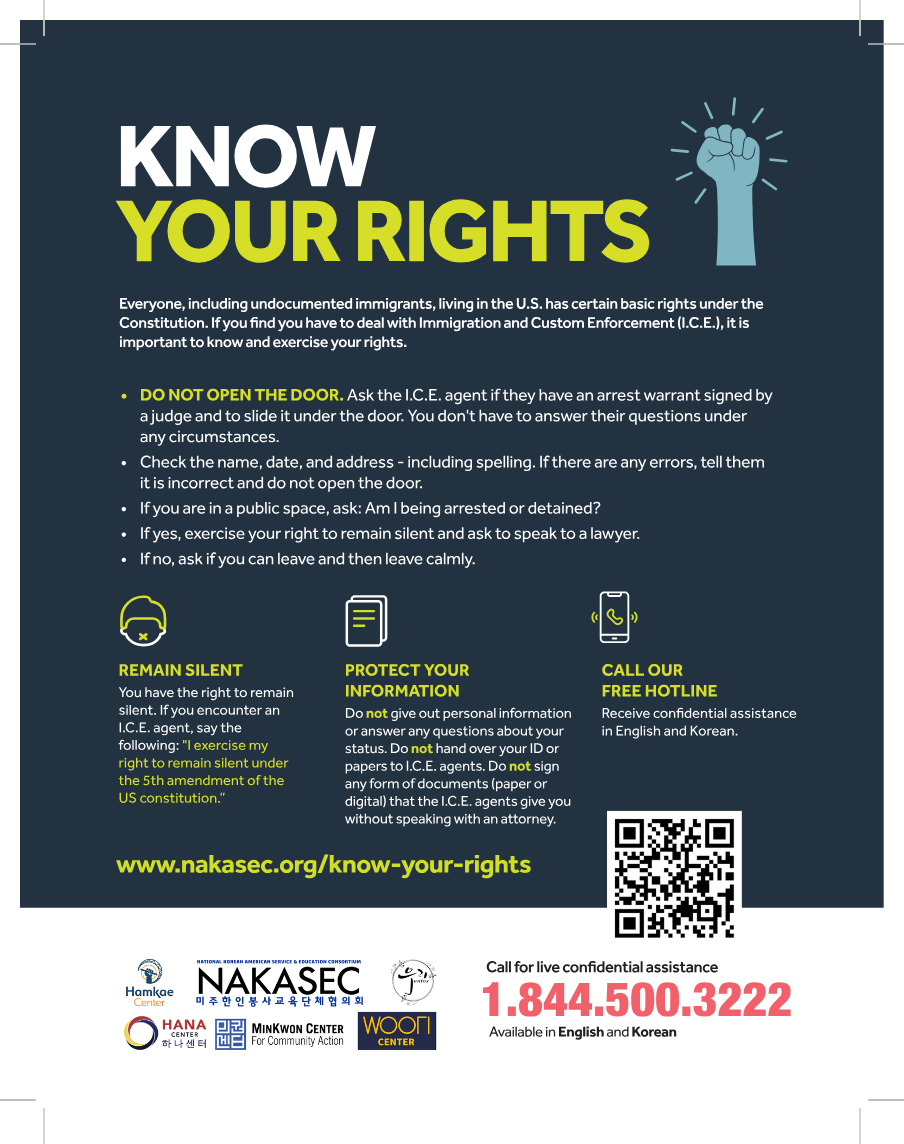
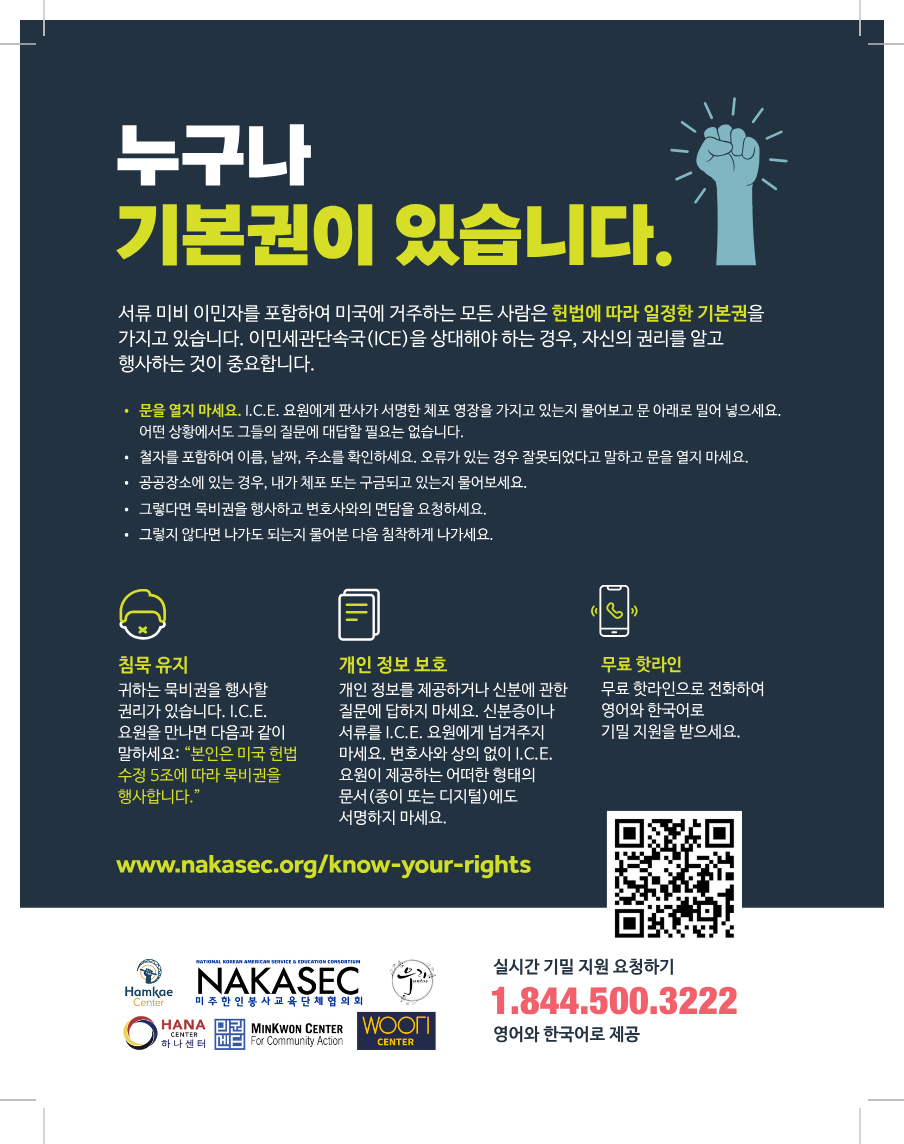
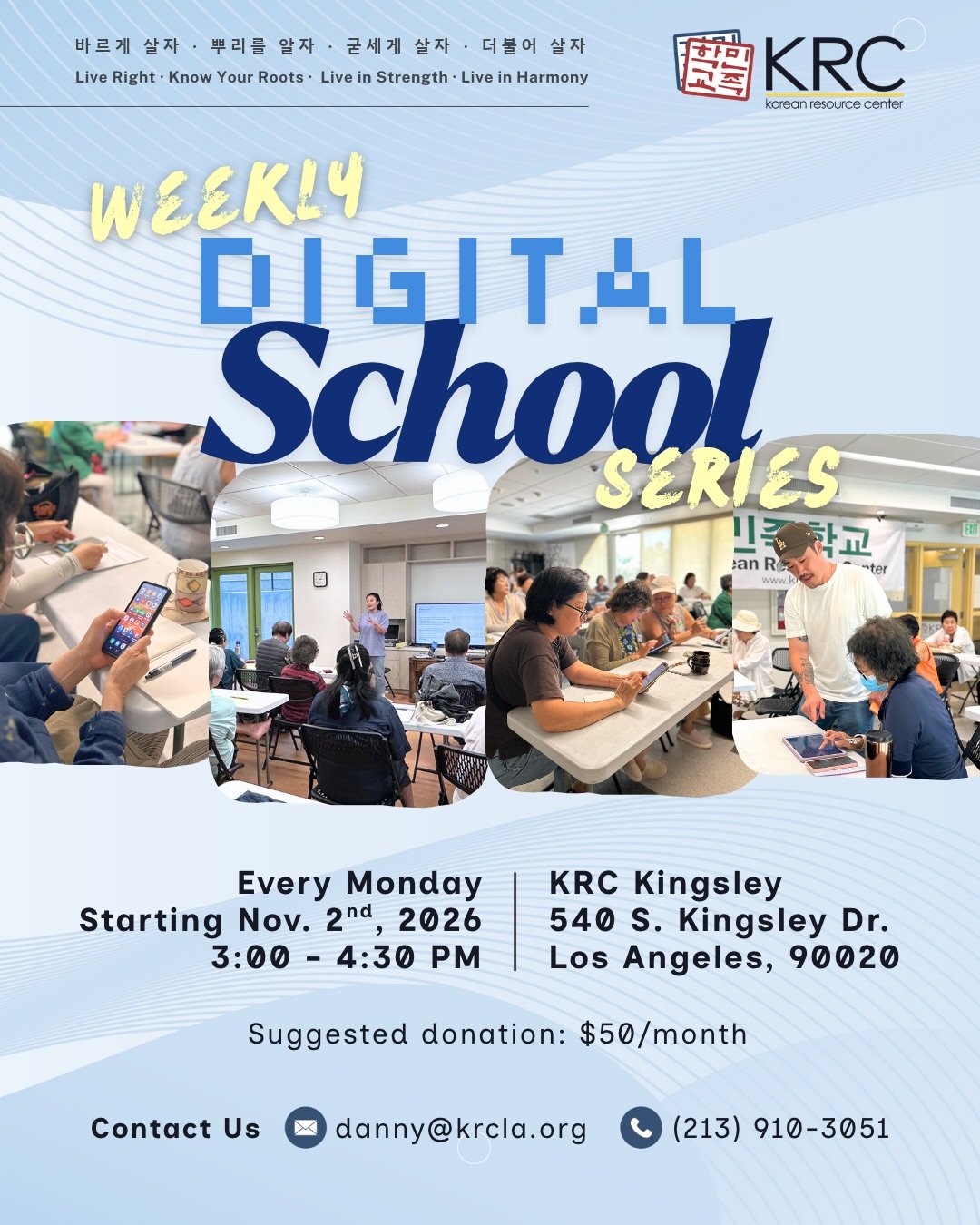
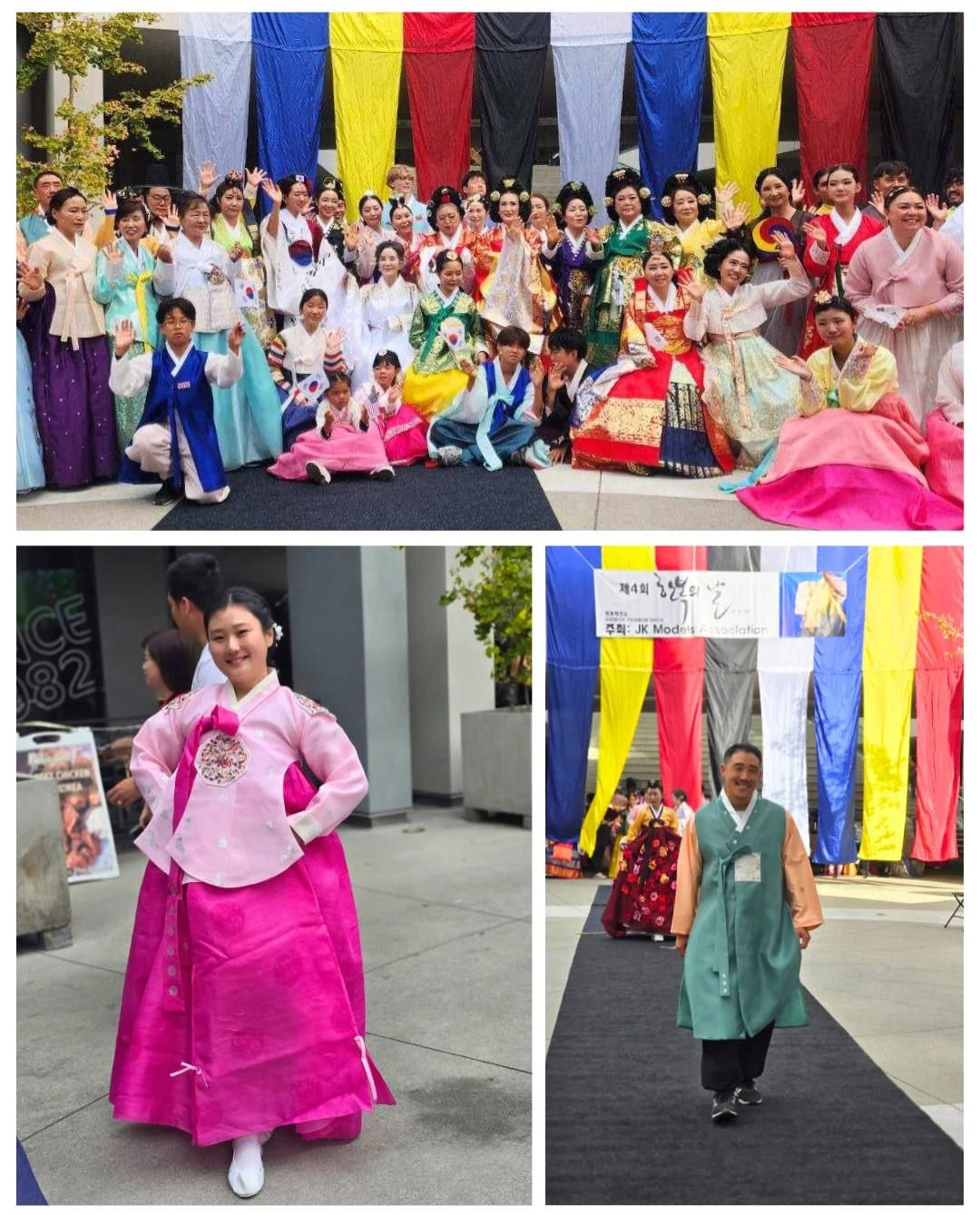
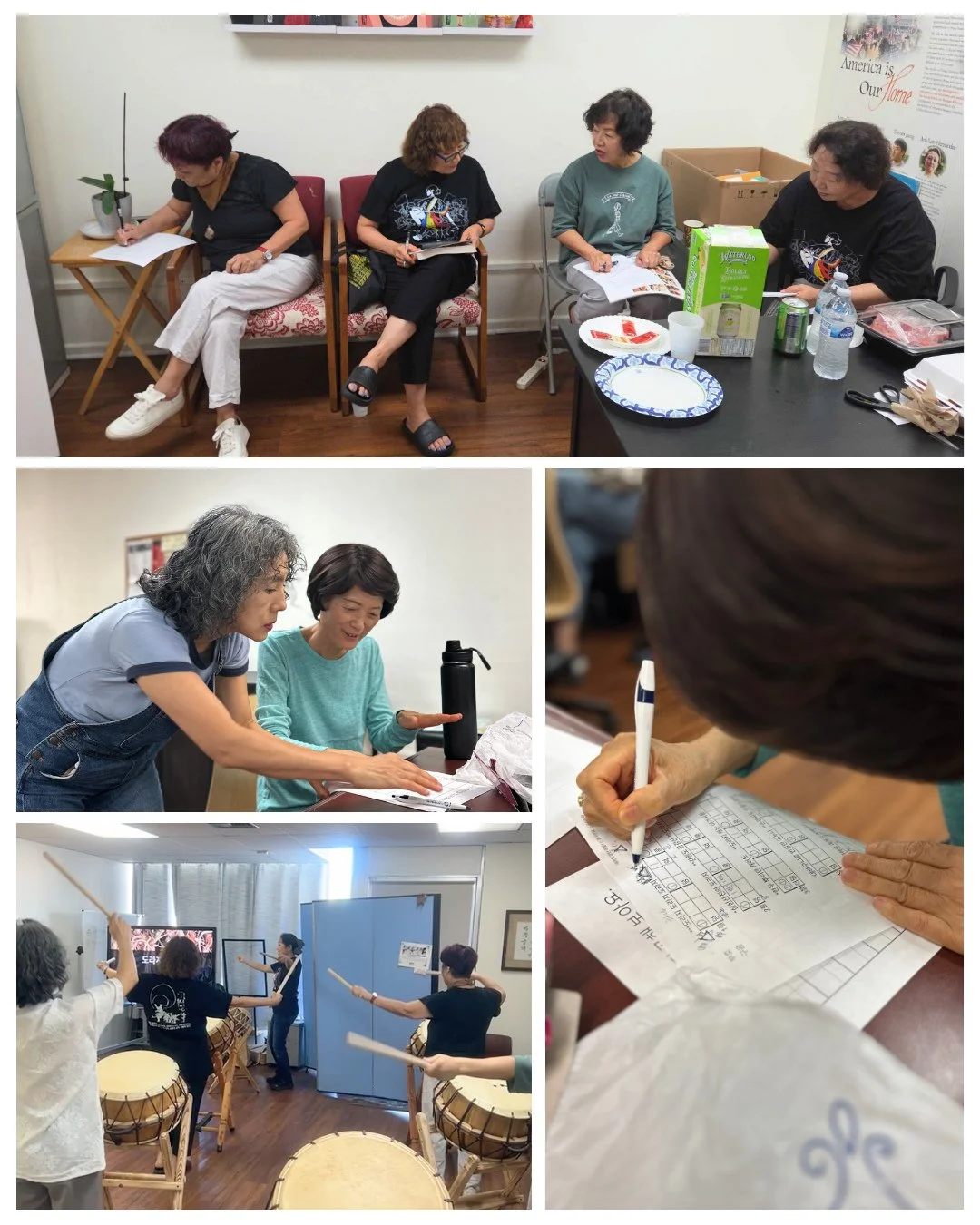
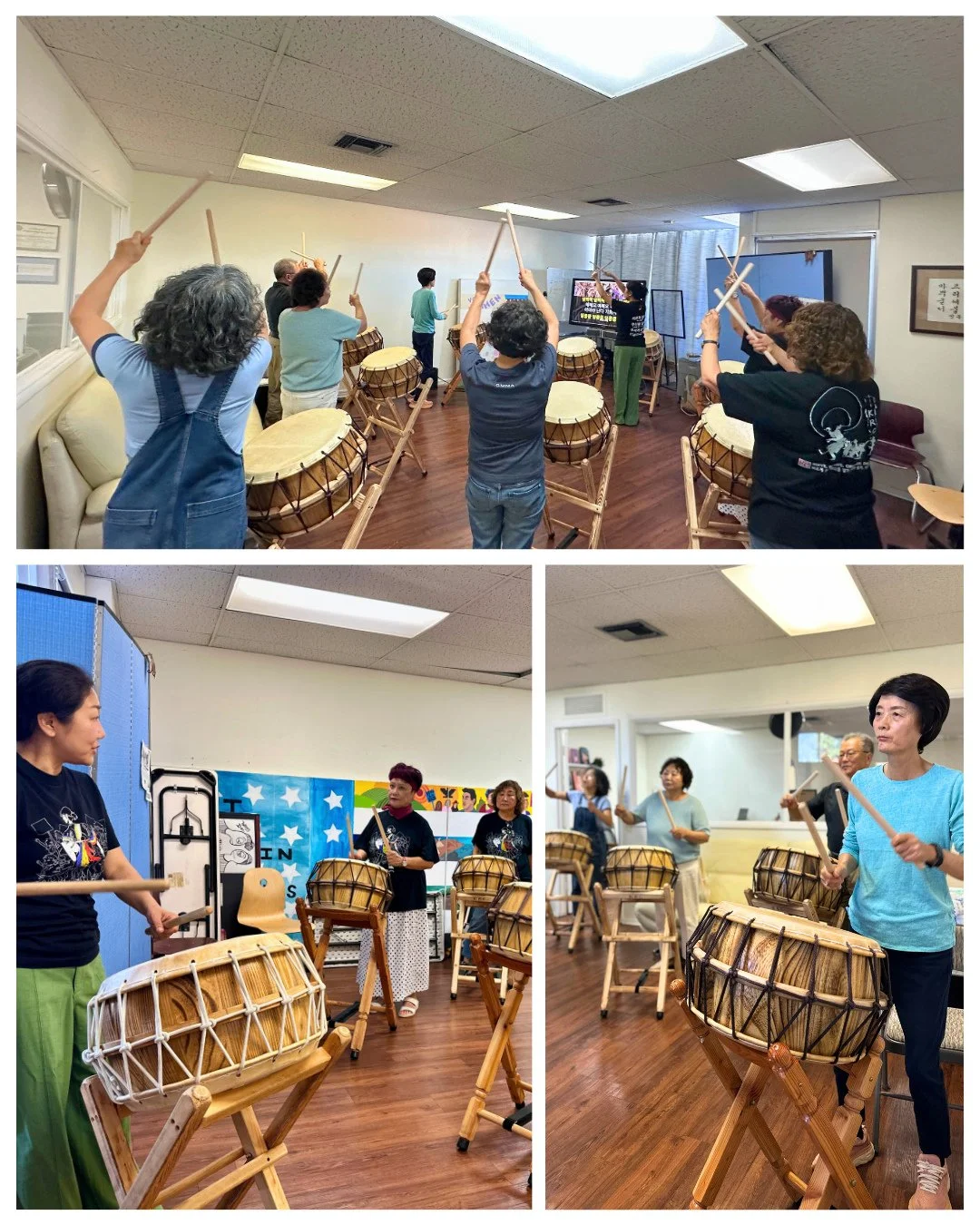
KRC offers different types of cultural and educational programs, which help individuals evaluate and analyze the issues that affect the community at the local and national levels.
Services

We offer various types of social services on immigration, health, and housing to assist our low-income community.
Organizing

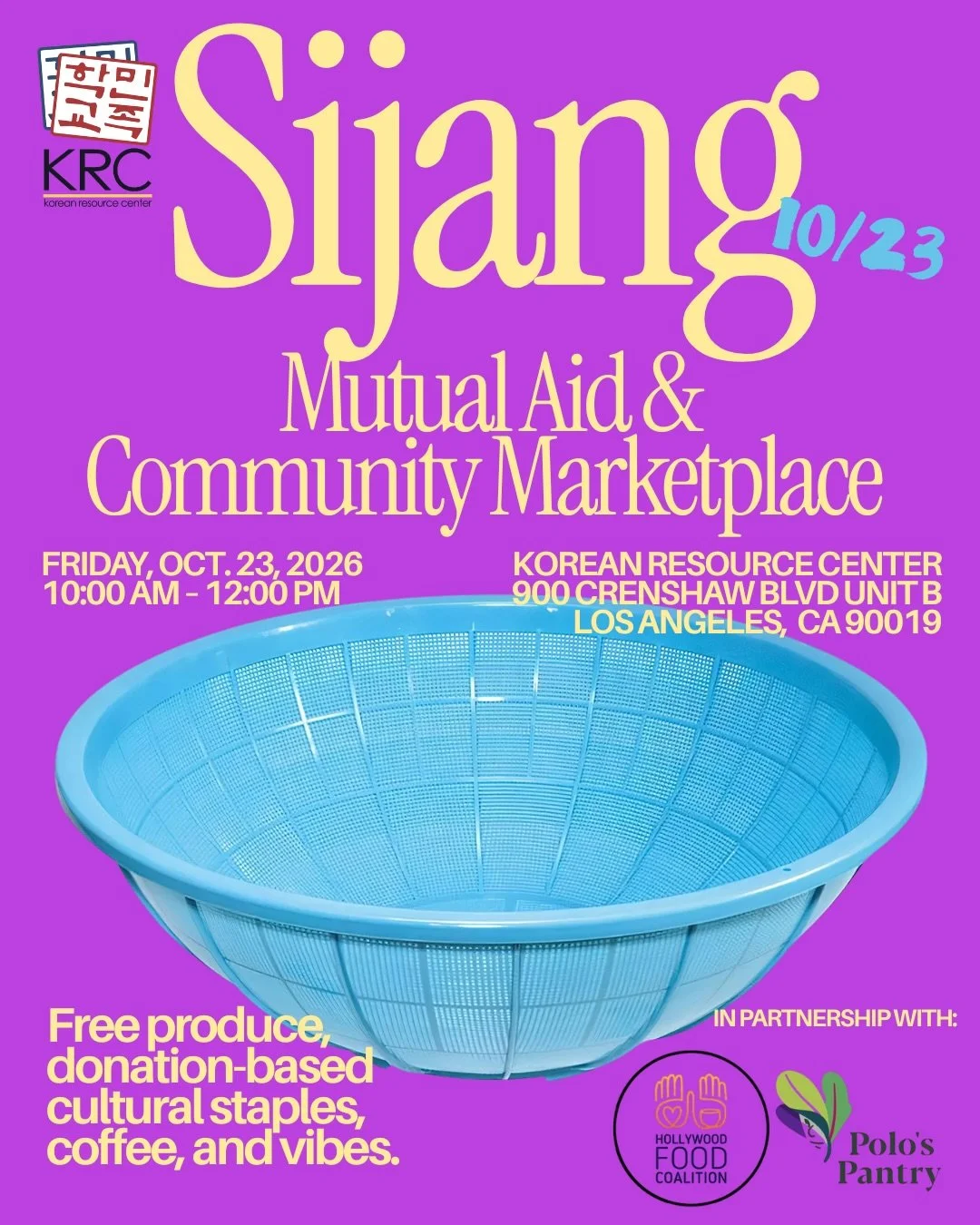
We organize locally and nationally and equip our community members with the right tools to build power and find the right solutions to various issues that affect them.
KRC Services
Since its founding in 1983, the Korean Resource Center (KRC) has provided in-language social and legal services and education to low-income immigrant Korean Americans, Asian Americans and Pacific Islanders (AAPI), and other low-income communities of color in Southern California.
KRC is recognized by the Department of Justice’s Board of Immigration Appeals (BIA) and conducts a variety of immigration legal services at low to no cost. Accredited representatives and licensed attorneys provide linguistically and culturally appropriate legal services to our community.
Mon~Friday: 9am-4pm
LA Office: 323-937-3718
OC Office: 714-869-7624
Please call us in advance to make an appointment.

Legal Services
Naturalization
DACA initial and renewal
Green card renewal
Family Petitions
VAWA
T-Visa
U-Visa
SIJS and other forms of relief

Access to Healthcare & Other Public Benefits
Medi-Cal
Medicare
My Health LA
Other

Housing Counseling
Affordable Housing
Senior Housing
Low-income Housing
Home Improvement and Rehabilitation
Pre-purchase
Reverse Mortage
Renter Housing
KRC provides inclusive, equal-opportunity services to all individuals without discrimination based on race, religion, gender identity or expression, sexual orientation, age, national origin, disability, or veteran status. We are dedicated to ensuring our programs and facilities remain welcoming, accessible, and supportive for everyone we serve.

We’d love to hear from you.
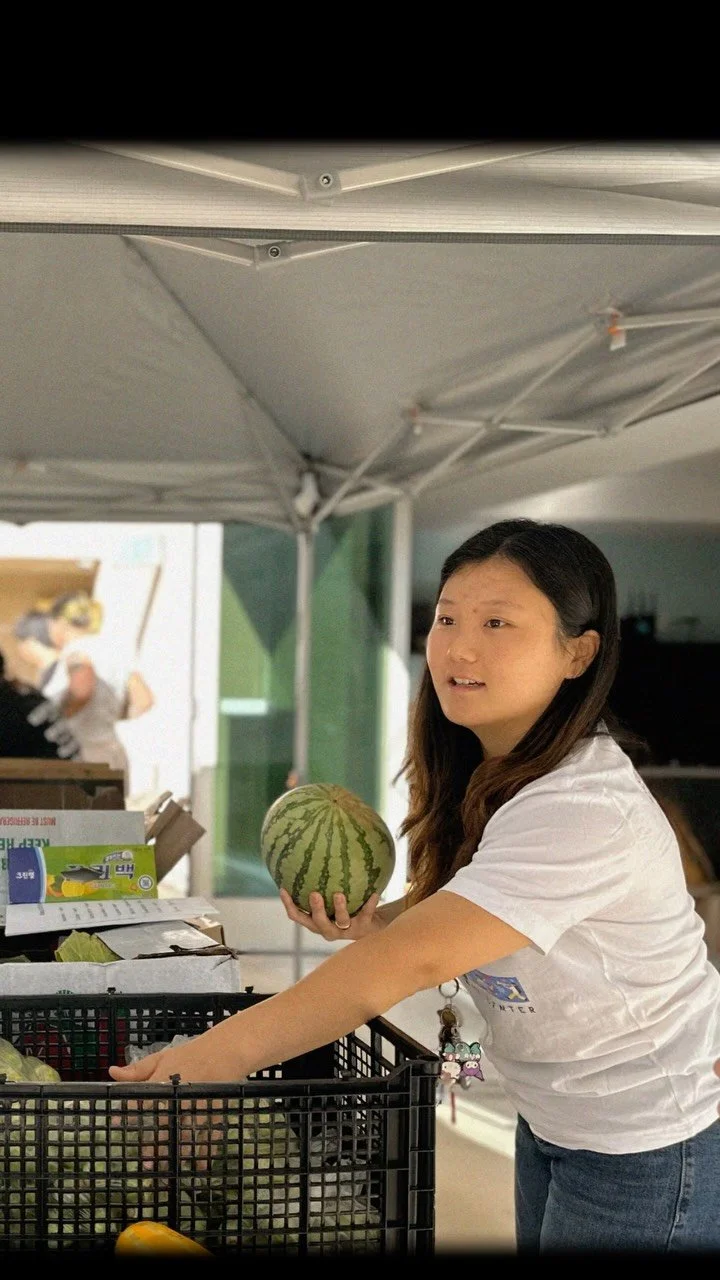
KRC always wants to hear from the community members. We believe that our work is stronger through the coalitions and partnerships we build in order to collectively advance the social and economic needs of all immigrant communities in our country.
Subscribe to our Digital Newsletter
Join our digital newsletter list to receive updates & events information. Let’s build community power together!
